Mparntwe Speaks // Andrew McPhee
"Mparntwe Speaks" is a series of talks, initiated by dogspike design & brings together leading voices in design, architecture, art, culture, and research. The common thread? Creative thinking that emerges from living and working in Central Australia.12 June 2025If you've ever stood on ANZAC Hill and looked across Mparntwe Alice Springs, chances are you've seen Andrew McPhee's work. Those iconic roof forms puncturing the skyline - the Catholic Church with its snaking concrete ribbon, the Anglican Church with its hyperbolic paraboloid curves catching light through stained glass - they're all by him. Twenty years of work that helped define what civic architecture could look like in Central Australia.
We were lucky enough to have Andrew present to Mparntwe Speaks recently, and honestly, the more we learn about his body of work, the more impressed we become. Not just because the buildings are beautiful (they are), but because of how he worked. Andrew's practice was built on observation - watching how people worked, what materials were actually available, what made sense in this climate, in this place, with these communities.
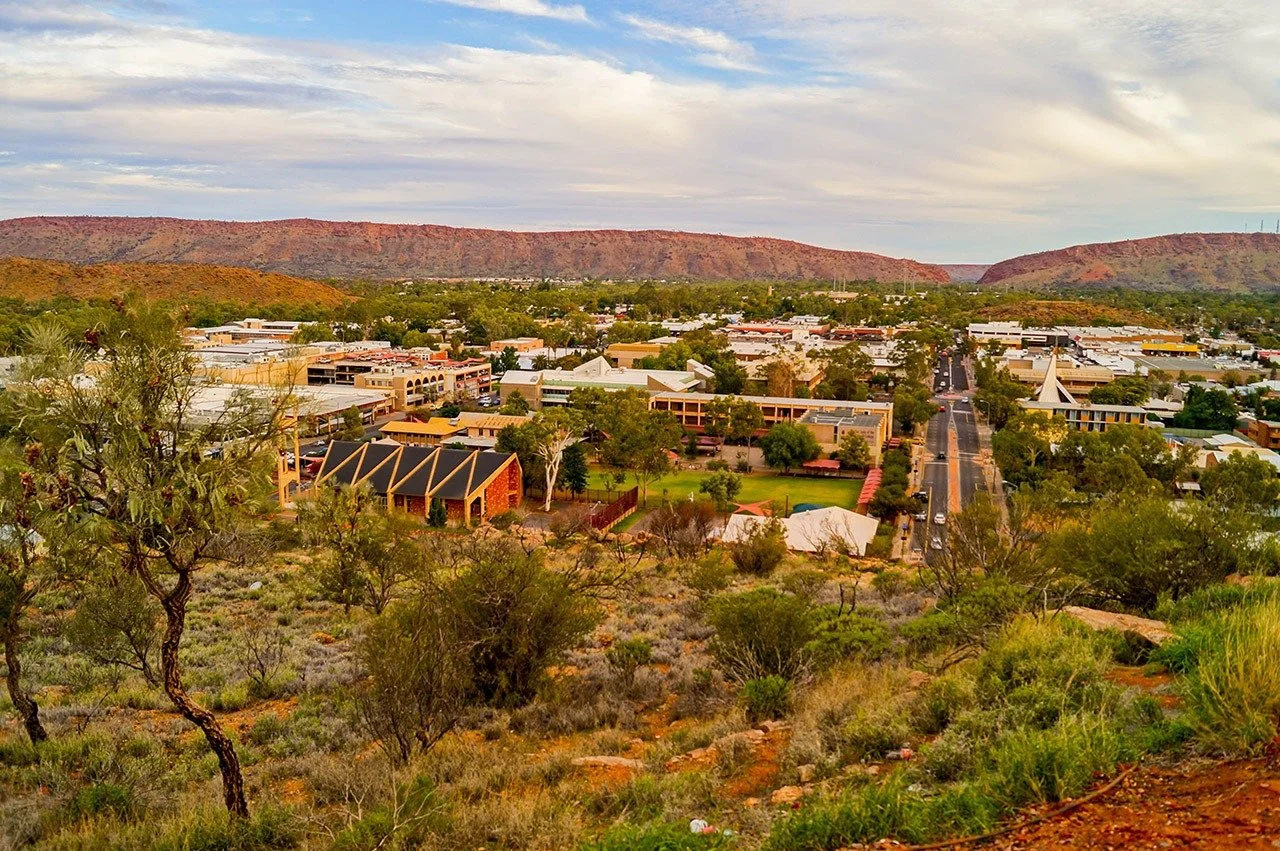
The Catholic Churches distinctive roof form is a key part of the skyline from ANZAC Hill in Mparntwe Alice Springs. Seen at the left hand side of this image with the zig-zag concrete and black roof.
An Exercise in Observation
Andrew arrived in Mparntwe in 1966. His first major job came a year later: the Catholic Church. Right away, he noticed something crucial - contractors in Alice weren't always great at everything, but they were damn good at concrete. So he used concrete as the main structure. A snaking concrete roof that both holds up the building and provides a considered fifth elevation. The roof is the building.
The tender came in over budget (the never-ending story for architecture, it seems). To bring it back in line, they cut the air conditioning. Not ideal in Central Australia, but it's a pragmatic move we still see today - like the Nightingale Apartments in Melbourne who've used the same strategy to keep housing affordable.
Material supply has always been an issue in Alice Springs. Andrew, being rigorously pragmatic, thought it was strange to get Queensland Maple from Adelaide. So he imported it directly from Queensland. Then thought... why stop there? He ordered high-quality floor tiles directly from Japan, cutting out the middle-person entirely and saving cost in the process.
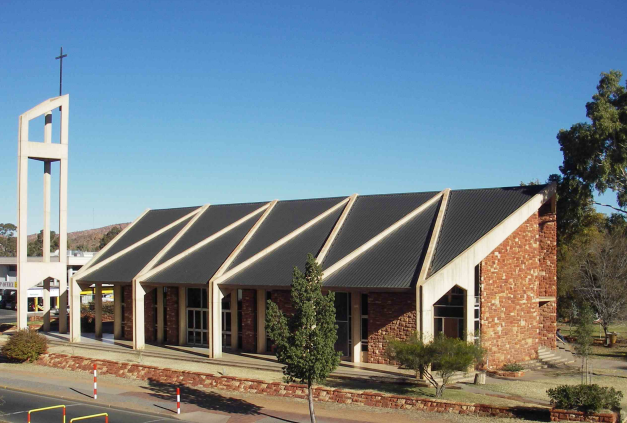
The Catholic Church’s distinct roof and structural system offers a considered elevation to the street and from above.
Building in the Shade
By 1978, Andrew was designing the Alice Springs Council Chambers. He'd observed two things: it was cheaper to use cold rolled steel sections than heavy timber, and people working in full sun were not very effective. Simple observations, but they drove the entire construction approach.
The solution? Design the building so the roof could go up first, allowing people to work in shade. The lightweight roof structure sat on 50x50mm square steel columns, braced temporarily before the wall structure came in. The roof form itself was inspired by Central Australian farmhouses - those big roofs with low eaves that you almost have to duck under to enter, shading the walls and keeping the interior cool.
The Pyramid Years
Around 1980, Andrew designed a house for his family at 7 Andrews Court. It's a big pyramid - evolved from an idea he'd seen in Queensland houses with central pyramid roofs. He used a spa pool and solar heater to heat and humidify the dry cold air in Mparntwe's winters, drawing the air up through the centre of the building. The walls and roof were made from cool room panels, coupled with good orientation, cross ventilation and shading. The house never dropped below 18 degrees in winter, even when desert nights fell below zero.
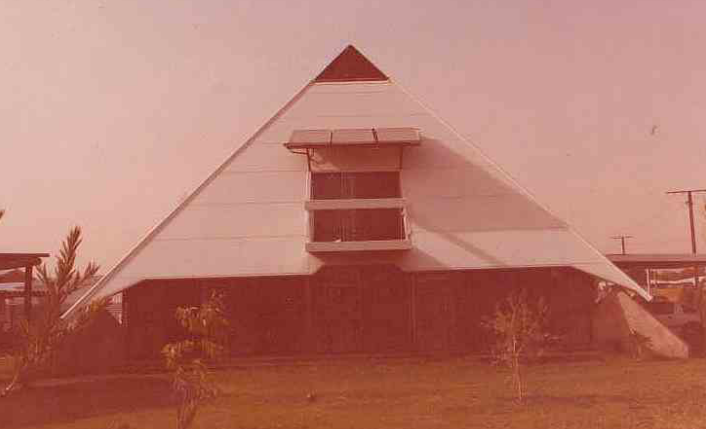
Pyramid House at 7 Andrews Court
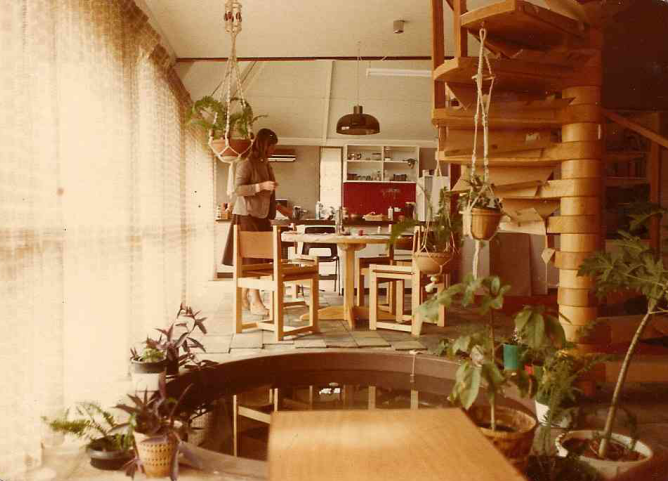
Interior of the Pyramid house with the spa bath that humidified and heated the air i hte coldarid winters.
The pyramid idea came back in full force with the 1982 Tennant Creek Civic Centre. It's still there in all its Egyptian-esque glory. The apex of the pyramid is a vented plant room holding the air-conditioning. The building was designed to be constructed on the ground and then lifted into place, the final pyramid top fitted like a glistening keystone.
Then in 1983, Andrew won a competitive tender for the Anglican Church at 18 Bath Street. Hyperbolic paraboloids - curves constructed using only straight structural members - with two mirrored forms joined by a seam of stained glass. It's still one of the most impressive buildings in Alice Springs.
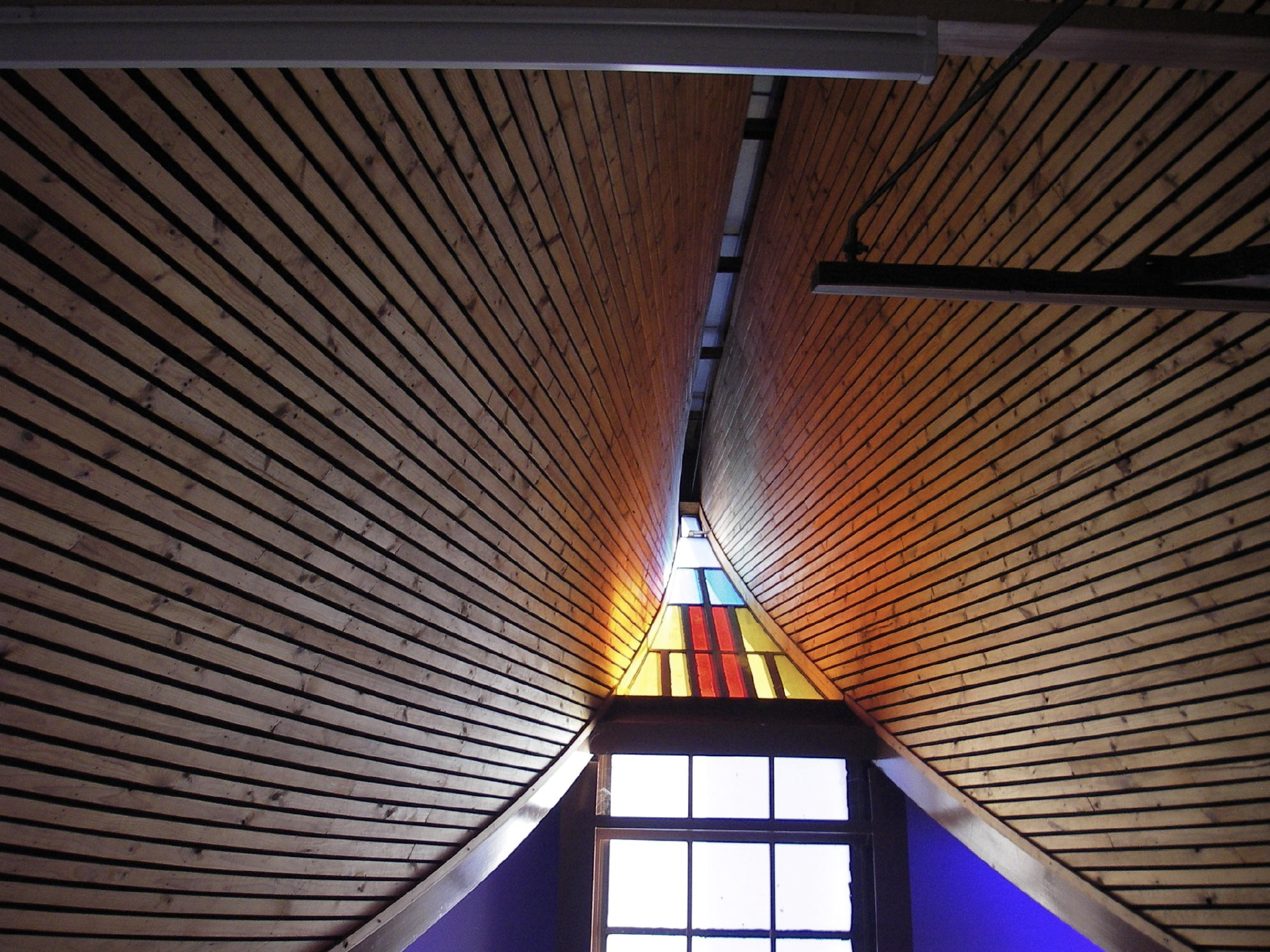
The Anglican Church hyperbolic paraboloid roof, stitched together with stained glass.
Learning to Fly
But it's Andrew's remote housing work from 1972-1978 that holds some of the most interesting lessons. When Goff Whitlam changed the "Office of Aboriginal Affairs" to the "Department of Aboriginal Affairs," more funding flowed to remote housing. The logic was simple: "white people don't build their own houses, why should Aboriginal people?"
Andrew found himself driving three hours to community meetings, only to discover people weren't there - often due to the incompetence of whoever was supposed to organise things. So he learnt to fly. Not as a romantic gesture, but because it gave him more time actually with communities rather than on dirt roads.
At Willowra in 1974, Andrew flipped the usual approach. Instead of designing roads and then placing houses along them (like the straight roads and evenly spaced blocks at Hermannsburg), he asked families where they wanted their houses. Then he designed the roads around those decisions. The houses themselves were built by two tradespeople, with an internal sand courtyard open to the sky that allowed for fires without damaging the built fabric. Multiple outdoor areas were provided - sun in winter, breeze and shade in summer. Plenty of options.
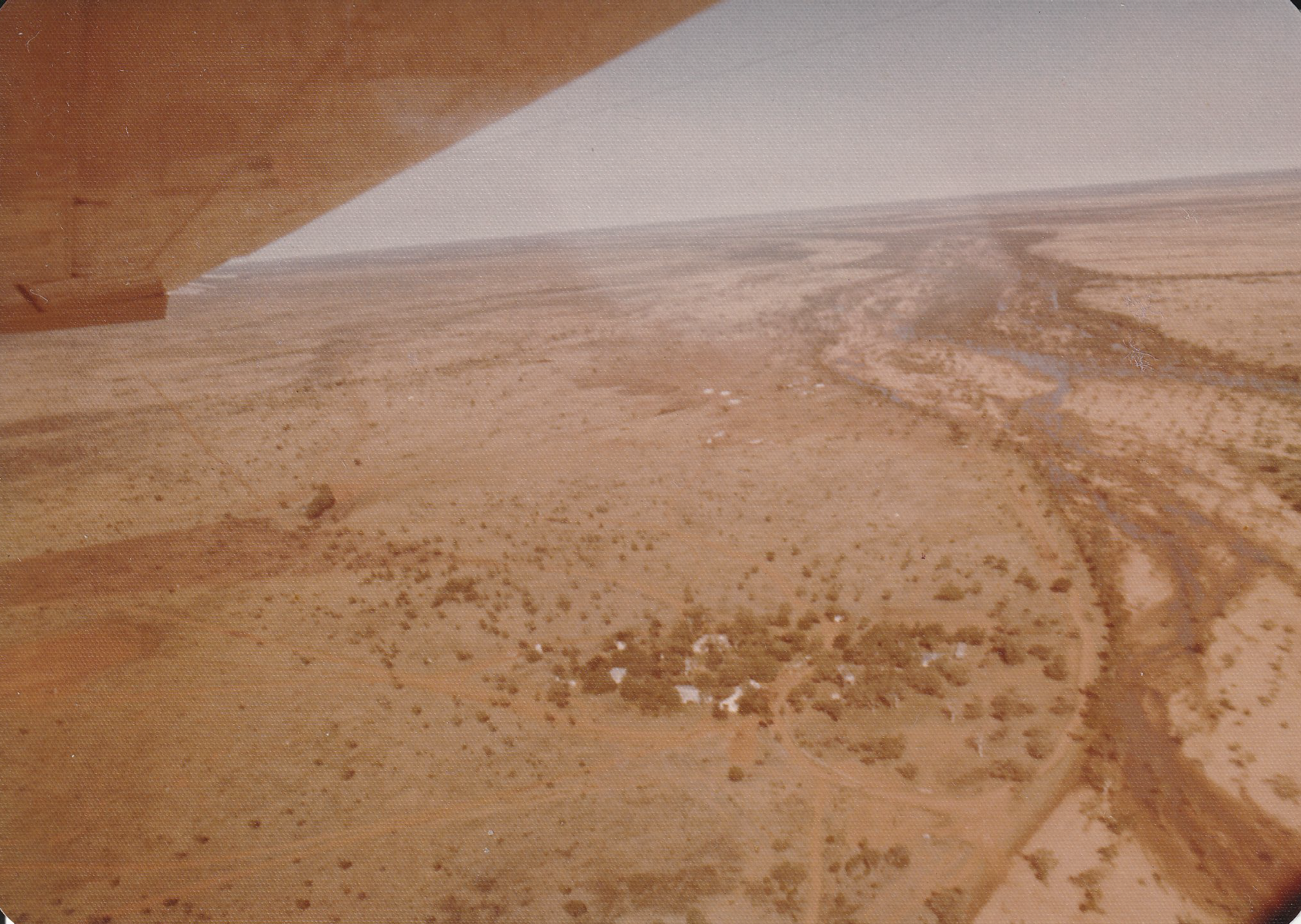
Willowra 1974
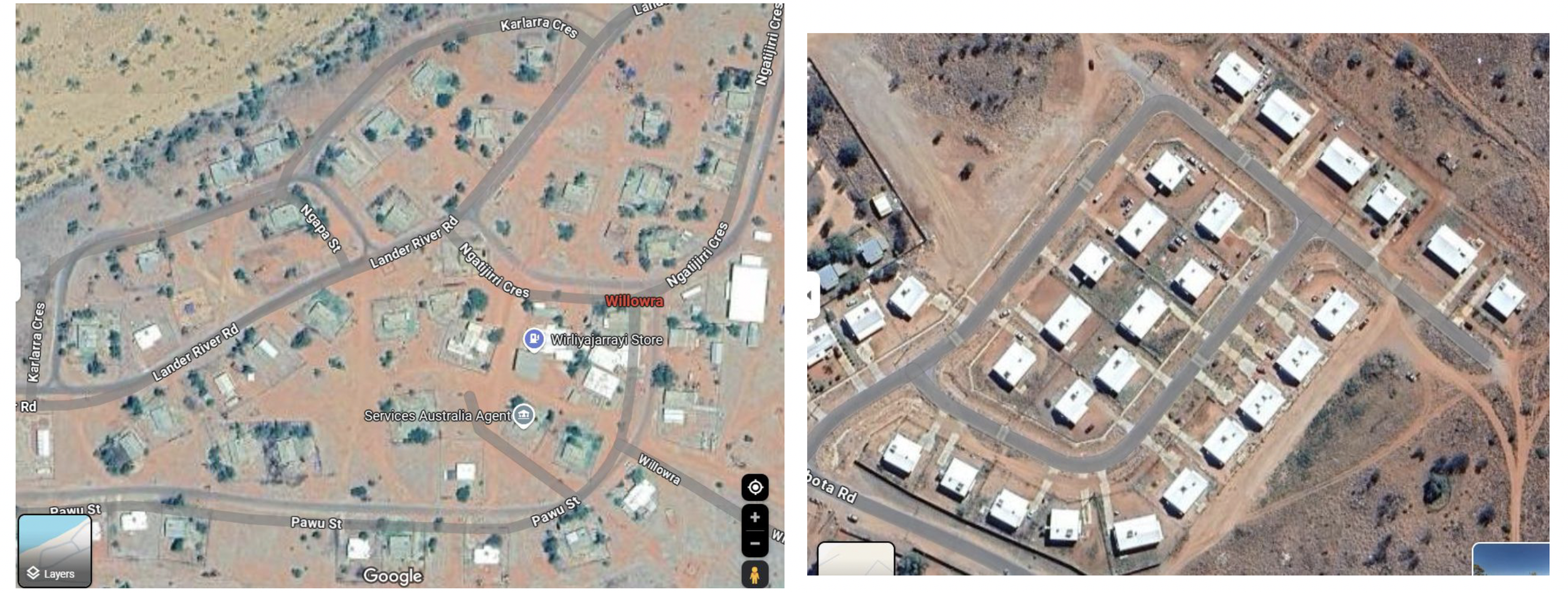
Willowra street layout (LHS) vs Hermannsberg (RHS). The street layout of Willowra was designed by Andrew with the community to reflect where people wanted houses rather than to the surveyors grid.
Houses That Could Change
At Apatula (Finke), Andrew developed an idea for houses that could adapt rather than forcing people to move as their needs changed. Internal walls could be relocated, allowing the house to evolve with the family. To achieve the spans needed for this flexibility, he designed a space frame - a structural element that spans large distances using small steel sections, built largely with local labour.
The construction sequence was clever: base plates for columns were cast flush with the slab. The roof could be built on the ground and then raised on these columns using engine hoists. The bottom chord of the space frame became the ceiling grid. Walls were lightweight prefabricated concrete panels that could be carried by four people and installed after the roof was up.
Tradesmen hated it. "That's not how you build a house," they said. The industry worked against it because it utilized local building skills rather than normative ways of operating. Andrew's observation: "If you want to build non-conventionally, it's better to not use tradespeople."
At Balgo, local people made concrete bricks with local sand. The idea was always the same - work with what's there, work with who's there, design for how things actually are rather than how you wish they were.
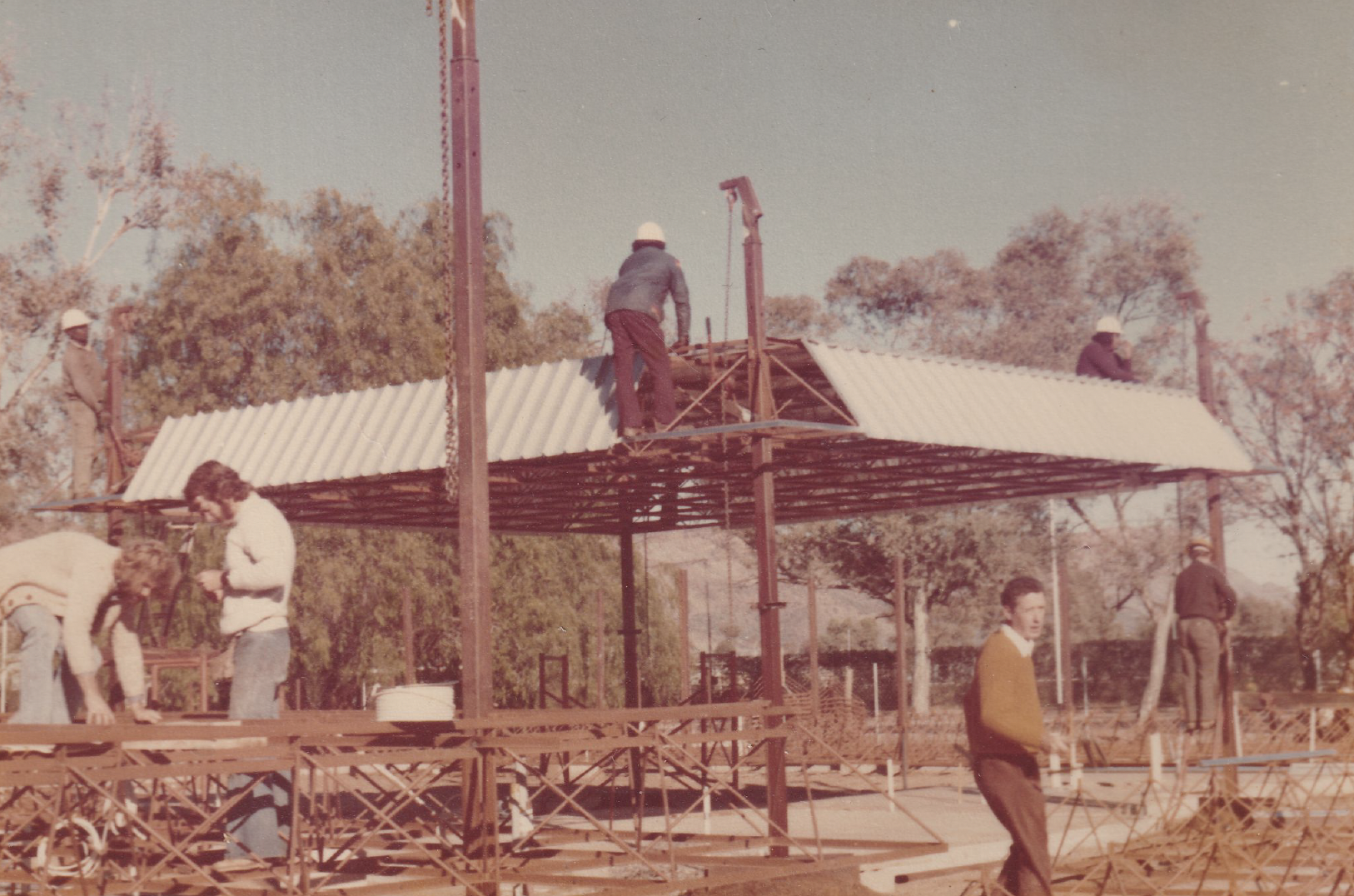
Apatula Housing - space frame and bolted connections allowed for local labour. This system provided a roof early in the construction process which allowed for shaded working conditions.
The Architect as Patsy
Andrew had a word in defence of architects working on these projects. "The brief and the budget are intrinsically linked," he said - a statement that shouldn't raise eyebrows. But these two key elements are often decided by clients, who, for all their skills and knowledge, have no idea what things actually cost. So it falls to the architect to give form to an idea and shoehorn it into the price. The job of a patsy.
His biggest win? Getting elected to local council when Whitlam brought local government to the Northern Territory. Local council controlled building regulations and had community members on the building board. They were able to modify regulations that weren't working and get a new town plan designed by ACBC.
What Sticks
Sitting through Andrew's presentation, what struck us most wasn't any single building. It was the consistency of his approach. Every project started with observation - not of other architecture, but of the actual conditions: who builds things here, what materials are actually available, how do people want to live, what's the climate doing, what makes economic sense.
The issues Andrew faced in the 1970s - material supply chains, inappropriate building codes, community consultation that's actually consultation, designing for how people live rather than how we think they should live - they're all still here. We're still wrestling with them on remote housing projects today.
But so are the lessons. Design the roads around where people want to live, not the other way around. Build the roof first so people can work in shade. Fundamentally, architecture as a response to observation.
Thanks to Andrew McPhee for sharing his work and insights with us, we have used photos from his great blog https://thepipirescuer.blogspot.com/2013/10/14-alice-springs.html
Select List of Projects:
1967 // Catholic Church, Alice Springs
1972 // 1 Bagot St REL Building, Alice Springs
1972 // ASREL Building, 20 Parsons St, Alice Springs
1978 // Alice Springs Council Chambers
1980 // Pyramid House, 7 Andrews Court, Alice Springs
1982 // Tennant Creek Civic Centre
1983 // Anglican Church, 18 Bath Street, Alice Springs
1972-1978 // Remote Housing: Santa Teresa, Willowra, Amoonguna, Apatula (Finke), Balgo, Ernabella