Mparntwe Speaks // Phil Hespe and Clayton Reeves
"Mparntwe Speaks" is a speaker series hosted by Dogspike Design & Architecture that brings together practitioners, researchers and industry leaders to share practical ideas shaping healthier, more resilient Communities across remote Australia.12 June 2025Closing the Performance Gap: Lessons from the APY Lands Energy Efficiency Retrofit Pilot
At June's event, Phil Hespe and Clayton Reeves from the South Australian Housing Trust presented early findings from the RACE for 2030 APY Lands Energy Efficiency Retrofit Pilot—one of Australia's most significant studies into improving the performance of existing remote housing. Their presentation explored what happens when housing performance is measured in the real world, and how those lessons are already influencing future housing programs.
There are few places that test a house quite like the Anangu Pitjantjatjara Yankunytjatjara (APY) Lands.
Across more than 103,000 square kilometres of arid Country, winter mornings can begin below -5°C, before summer temperatures climb beyond 45°C. Homes must withstand extreme heat and cold, dust, distance and the realities of maintaining buildings in some of Australia's most remote Communities. In places like these, housing is more than shelter—it is fundamental to health, comfort and the ability for families to live well on Country.
Against this backdrop, the APY Lands Energy Efficiency Retrofit Pilot set out to answer a deceptively simple question:
How can we make the homes people already live in perform better?
While much attention is placed on designing new energy-efficient housing, thousands of existing homes will continue to support families for decades to come. The challenge is understanding which improvements will make the greatest difference before valuable maintenance and retrofit budgets are spent.
Looking beyond the star rating
Many of the houses involved in the pilot were already considered well designed. They featured generous verandahs, insulated roofs and walls, reflective foil barriers and achieved NatHERS ratings of around 8.2 stars during design.
Yet, as Phil Hespe and Clayton Reeves explained, design ratings only tell part of the story.
Over time, buildings change. Seals deteriorate, insulation shifts, materials weather and small construction gaps begin affecting thermal performance. The project recognised that understanding how homes actually perform after years of occupation is just as important as how they were originally designed.
To investigate this, researchers combined household interviews with blower door testing, thermal imaging, energy monitoring and computer modelling across twenty homes. Twelve houses were monitored in detail, while six received staged retrofit upgrades ranging from gap sealing to additional ceiling and wall insulation.
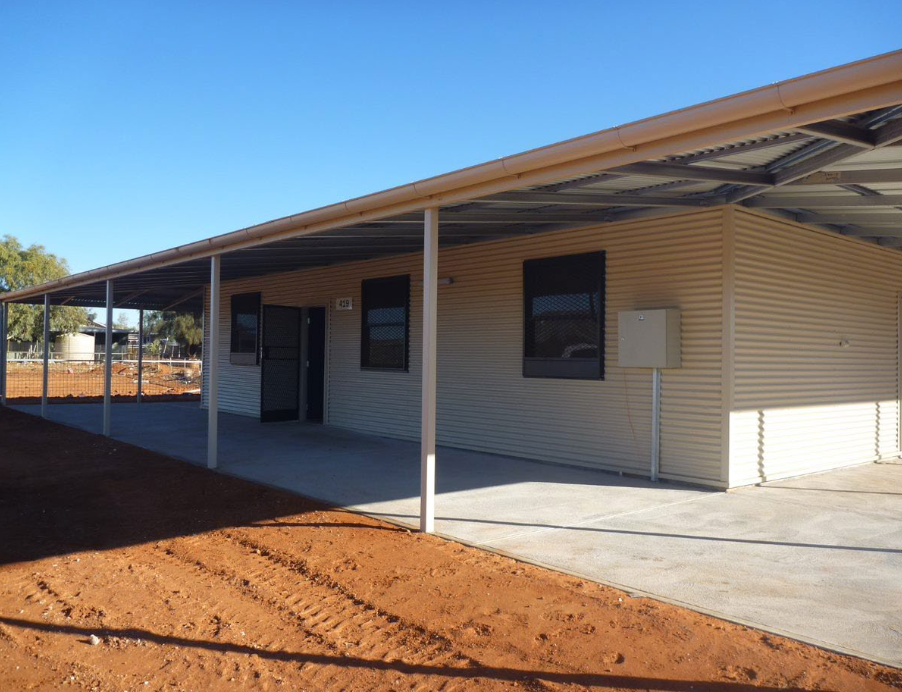
Housing on the APY lands are steel framed and have generous verandahs all around that shade the building and allow swags to be used anywhere around the building even if raining or hot.
The biggest gains came from something invisible
One of the project's clearest findings was that air leakage represented the single greatest opportunity to improve housing performance.
Testing found conditioned air escaping through construction joints, door and window frames, exhaust fans and countless small gaps throughout the building envelope. On average, the homes experienced around 25 air changes per hour, significantly increasing heating and cooling demand.
Following relatively straightforward airtightness improvements, the retrofit homes achieved an average 53% reduction in air leakage—the largest reduction in energy demand recorded throughout the pilot.
The findings challenge the assumption that major upgrades are always required. Sometimes the greatest improvements come from understanding where a house is quietly losing performance and addressing those issues first.
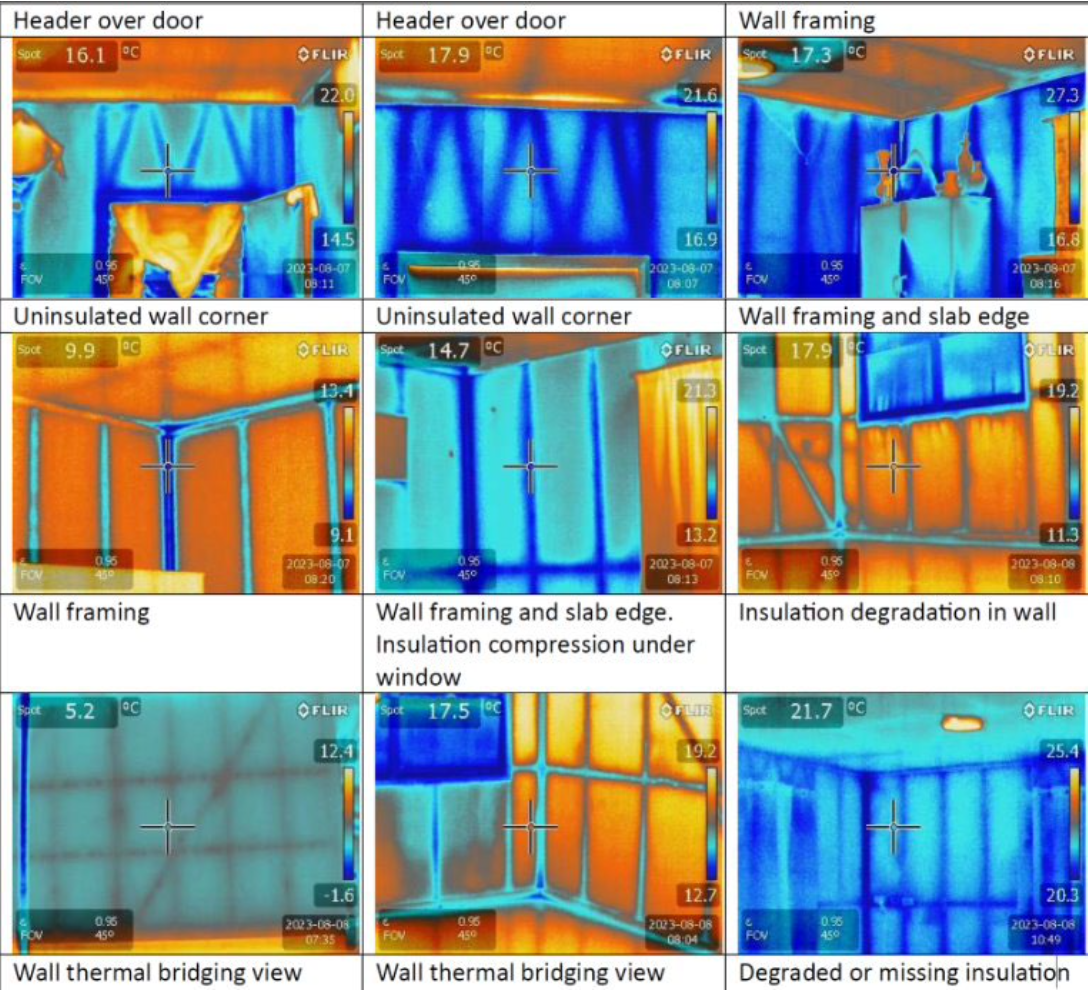
Thermal imaging also highlighted ongoing thermal bridging, degraded insulation and construction details that continued transferring heat despite meeting current building standards, reinforcing that compliance does not always guarantee real-world performance.
Better buildings, better living
The data told one story, but residents told another.
Households consistently reported that retrofitted homes stayed cooler for longer during summer, retained warmth better through winter and required less heating and cooling to remain comfortable. Homes receiving both airtightness improvements and additional wall insulation delivered the greatest improvements in comfort.
Importantly, the project recognised that successful retrofits extend beyond the physical building. Alongside technical upgrades, the pilot invested in tenant education, local workforce training and practical maintenance knowledge, recognising that long-term performance depends on people as much as products. The project's broader ambition is to develop affordable retrofit solutions that can inform government policy while building local capability to support housing into the future.
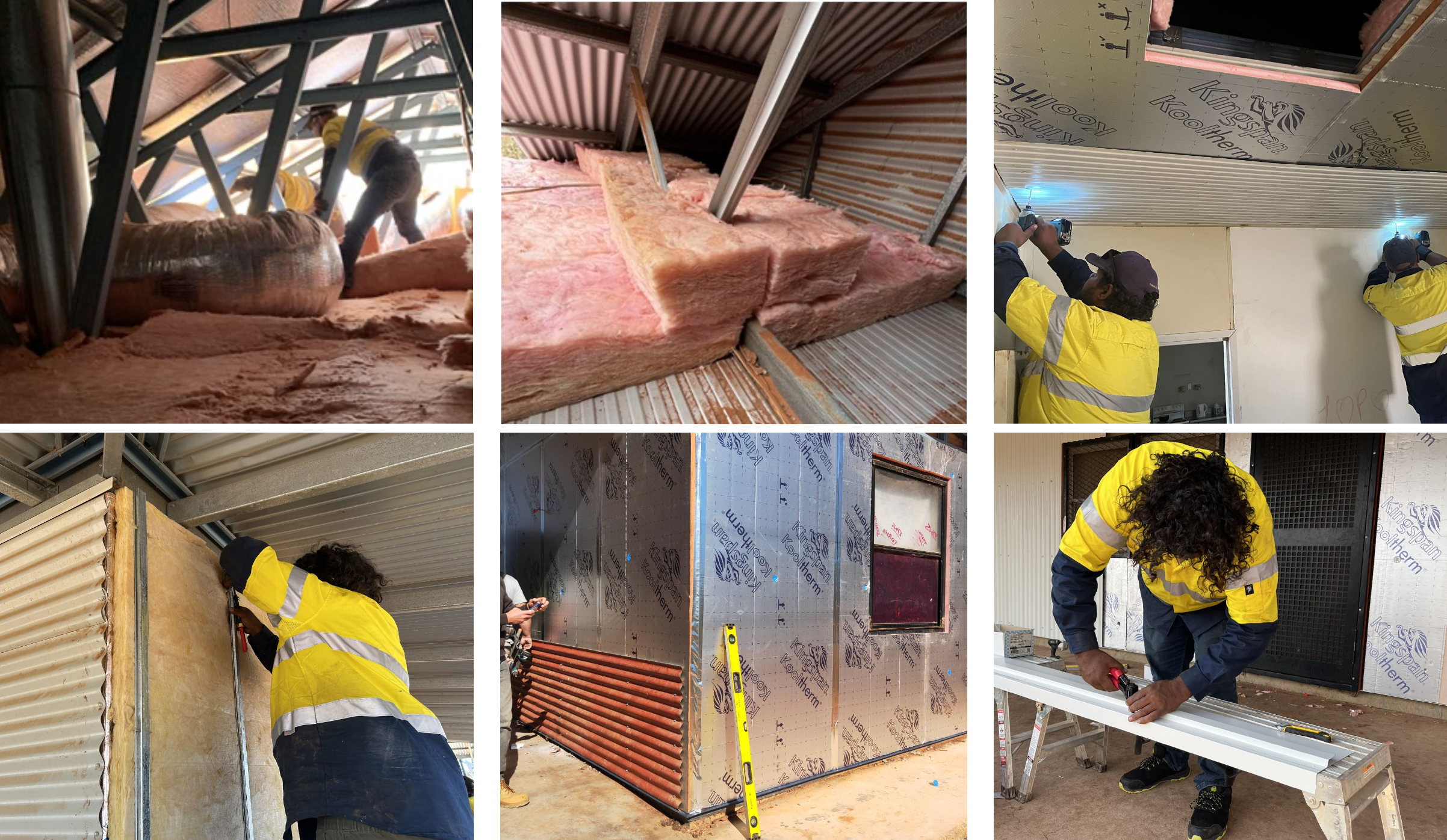
Trades, trained and worked alongside local workforce for the upgrades
Key takeaways for housing providers
While the APY Lands present unique environmental challenges, the lessons from the pilot have broad relevance for housing providers, designers and governments across Australia.
Measure performance, not assumptions. Real-world testing reveals issues that design ratings alone cannot identify, helping direct maintenance funding where it delivers the greatest impact.
Prioritise the building envelope. Improving airtightness through relatively simple measures such as sealing gaps and improving door and window seals can significantly reduce energy demand while improving comfort.
Use evidence to guide retrofit investment. Targeted, staged upgrades supported by monitoring ensure limited budgets are spent on interventions that deliver measurable results.
Invest in people as well as buildings. Tenant knowledge, local trades and ongoing maintenance capability are essential to achieving lasting improvements.
See existing housing as a climate adaptation opportunity. Improving the homes we already have may be one of the fastest and most cost-effective ways to reduce energy stress, improve health and build resilience across remote Communities.
From evidence to action
One of the presentation's strongest messages was its practicality.
Rather than searching for a single solution, the project demonstrates the value of careful observation, rigorous testing and evidence-based decision making. By understanding how houses actually perform—not simply how they were intended to perform—housing providers can make smarter investments that improve comfort, reduce energy demand and deliver lasting benefits for the people who live there.
The findings are already informing the South Australian Housing Trust's Housing Australia Future Fund rollout and helping bridge the gap between policy, funding and on-the-ground performance.
As Australia's climate continues to change, that evidence has never been more important. The houses are already here. The opportunity now is to help them become cooler, healthier and more resilient places to live.
Learn more
To explore the project and presentation further:
APY Lands Energy Efficiency Retrofit Pilot
https://netzeroenergybuilder.com.au/netzero/apy-lands-energy-efficiency-retrofit-pilotWatch the Mparntwe Speaks presentation
https://youtu.be/0IEtJ4jeVi4RACE for 2030 – Reliable, Affordable, Clean Energy
https://racefor2030.com.au/South Australian Housing Trust
https://www.housing.sa.gov.au/